
Tag: material

  • Here’s What the Housing Market May Look Like in 2030

    Here’s What the Housing Market May Look Like in 2030

    The housing market has made headline news over the past two years, with countless buyers being priced out of the market. Not only have home prices exploded by as much as 50% in some areas, interest rates have more than doubled off their 2020 lows. This has made housing unaffordable for countless buyers, as the combination of rising prices and interest rates have made the average house payment jump by more than 30%.

    This may not seem to be the right time to be looking ahead to where the housing market will be in 10 years, but the truth is that people will always need a place to live. Knowledge is power when it comes to making financial decisions, so here’s a look at what some experts say the housing market will look like in eight years.

    Prices Will Be Much Higher

    It’s almost a given that in spite of current high prices, houses will cost even more 10 years down the line. According to RenoFi, the cost of a single-family home in the U.S. is likely to hit $382,000 by 2030.

    In the near term, even though price growth seems to be slowing, the fact remains that America still faces a shortage of available homes. While rising mortgage rates will likely reduce price growth in the near term, the scales are still tilted toward demand over supply. This imbalance is likely to last at least another year, and possibly two or three, until the combination of rising new builds, higher interest rates and slower investor interest remove some of the demand for homes.

    Especially in California

    Quoting the “average” price of a home in the United States doesn’t always provide buyers with information that is relevant. Real estate pricing is always highly regional, and it really does come down to “location, location, location.” If you live in California, the so-called “average” home hasn’t seen $382,000 in decades.

    RenoFi projects that by 2030, for example, San Francisco will have the highest average home value in the country, at a whopping $2,612,484. Two other California cities, San Jose and Oakland, expect to price out at $2,251,703 and $1,713,554, respectively.

    Save as Much as You Can

    Regardless of how high prices seem like they will be down the line, the advice for those looking to buy remains the same as it always has: Save as much as you can. The biggest burden for most homebuyers is not so much the monthly mortgage payment but coming up with enough money for a down payment.

    If the average home price across America will be $382,000 by 2030, potential homebuyers should be trying to save up a 20% down payment of $76,400 over the next eight years. On a straight scale, not factoring in inflation or any investment gains, that means you’ll need to save $795.83 per month. Of course, if you live in a high-cost area you’ll have to save more, but this is a good guideline as to the amount of savings you’ll need for the average home.

    Invest Your Savings

    To make your journey toward reaching your down payment target easier, the best thing to do with your savings is to invest them. If you could achieve a modest 4% annual return on your money over the next eight years, you’d only need to save about $675 per month, as opposed to $795.83. And if you could earn a 5% return on your investment, your monthly required savings would drop to about $650.

    Price Gains and Inflation

    Although these price gains may seem astronomical, over a period of eight years, they are more or less expected to keep pace with inflation. When viewed in that light, those price gains are not only normal but relatively modest. This is why investing your savings for a future home purchase can actually give you a substantial leg up.

    With prudent investing, your savings could easily outpace the gains in inflation. This means that even though prices are going up while you’re waiting, you’re actually reducing the effective cost of your purchase by increasing the value of your investments.

    Is There Still Time To Buy?

    If you’re trying to flip a house or looking to move somewhere else within the next two years, you might want to hold off on buying a home for the time being. But if you’re either a long-term investor or plan to reside in one location for 10 years or more, you’re likely still in the clear if you’re looking to buy.

    Although prices currently seem high, experts project they will be even higher eight years down the road. While mortgage rates have ticked up rapidly in 2022, they are still trending below long-term averages — and if they fall over the coming years, you’ll have the option to refinance at a lower rate.
  • What’s the Deal with Lumber Prices?

    What’s the Deal with Lumber Prices?

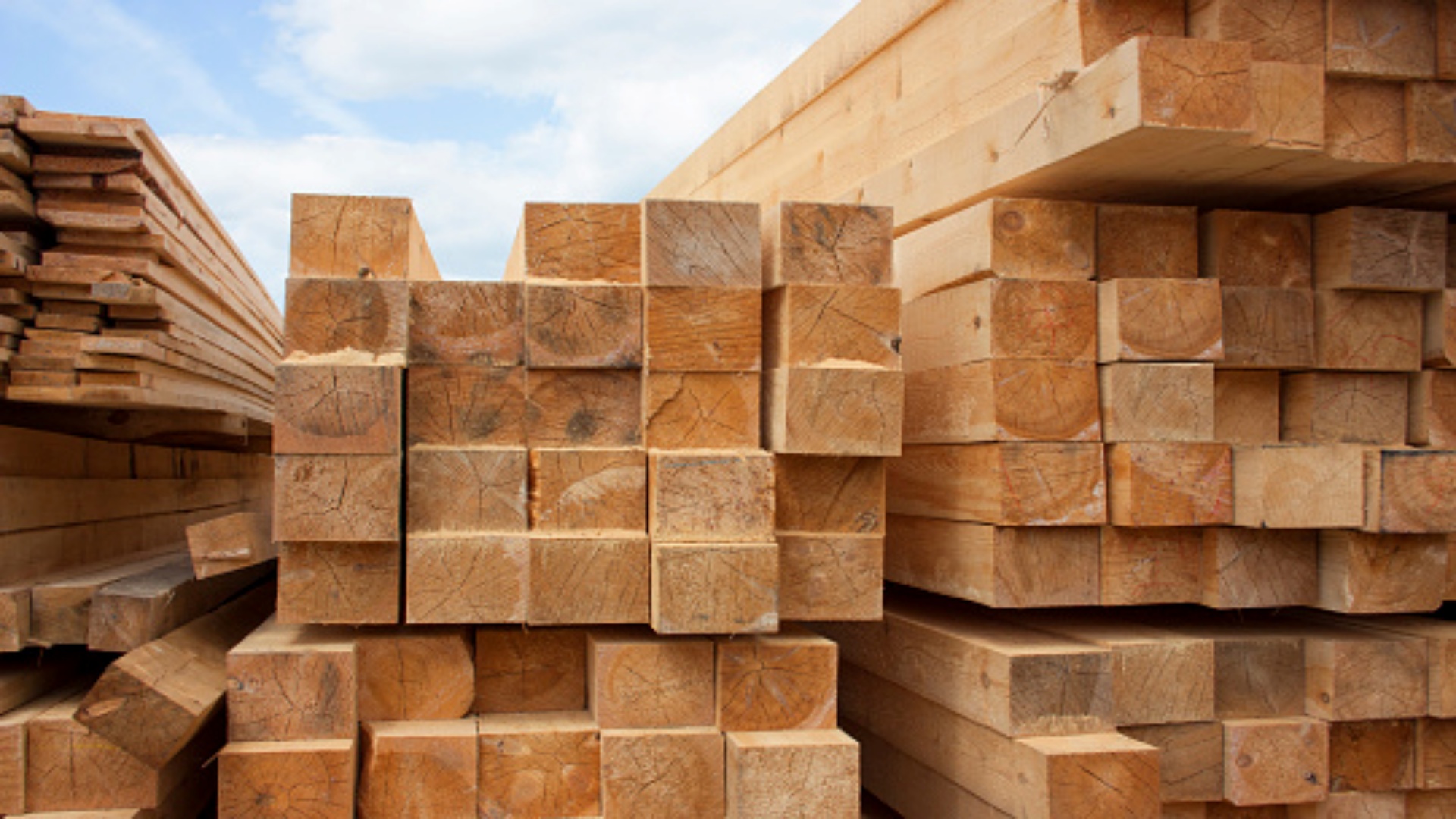
    Over the past few years, lumber prices have skyrocketed. According to the National Association of Home Builders, prices went up by 30% between Hurricane Harvey in August 2017 and January 2018. At the time, this price was higher than any prices on record since NAHB started keeping such records in 1995. March of 2018 saw lumber futures climb even higher, over $520 per 1,000 board feet, up from January’s numbers, which climbed between $420 and $460 per 1,000 board feet.

    These days? Although the reasons for it have changed, lumber prices are still soaring higher and higher. Today, these higher prices are in large part due to the pandemic creating chaos throughout markets. New numbers from the National Association of Home Builders shows that since mid-April of 2020, lumber prices have risen by 130%, and those increased costs have increased the cost of single-family homes more than $16,000 on average.

    With these thoughts in mind, here are some of the causes of these rising costs—and a quick look into the future concerning both lumber prices and how these prices will affect housing costs.

    Why are Lumber Prices High?

    There are a variety of factors coming together all at once to affect lumber prices. Over the past few years, demand has increased dramatically while supply has tightened. For starters, growth of gross domestic product in all major economic regions of the world is fueling something of a world-wide construction boom. In the U.S. alone, single family home construction increased 7% between January 2017 and January 2018.

    With the pandemic, the amount of lumber being used in construction continues to rise. Surprisingly, housing starts are up, showing an increase of about 17% between May and July. With that, other areas are placing demand on the lumber industry. More DIYers are doing projects like decks so that they have a place to get outside during these troubled times, and restaurants across the U.S. are using more and more lumber to build outdoor seating and dining areas.

    Meanwhile, the lumber industry has faced struggles of its own with shutdowns and a decreased demand for timber in other areas, like paper manufacturing and home goods, where downturns have been steep. All of this is combined with the fact that several years ago, the U.S. raised import duties on Canadian lumber, which has been causing a supply shortage in the U.S. as Canada exports less lumber southward.

    Pandemic aside, there are also the rising costs of everything going into lumber production—labor, transportation, containers and so on, all costing more across the board, which drives up the cost of lumber regardless of supply or demand. The cost of a flatbed truck to haul lumber, for instance, went up 24% between January 2017 and January 2018.

    Where are Lumber Prices Right Now?

    In some cases, lumber prices have doubled and tripled over the past year. OSB board prices, for example, were three times higher in September 2020 compared to September 2019. Other prices have gone way up, too. Western SPF 2x4s, for example, have gone up 158% over the past year, studs have risen 164%, and southern pine has gone up 147%.

    Will Lumber Prices Stay High?

    Back in 2018, experts were saying that with the current chaos in the lumber markets, prices were expected to be high through 2020. After that, costs were expected to come down.

    Now that COVID-19 is here to stay, however, things have become much more unpredictable. In order for prices to come down, several things need to happen. In the U.S., lumber production will need to increase to cover the lost supply from Canada or Canadian import duties will need to come down so that Canada can export more lumber to the United States. Shutdowns within the lumber industry will need to come to an end, and timber producers will need to increase the amount they’re producing in order to bring costs down.

    Once these things start to happen, lumber prices should fall—but when that may happen depends on when life will return to “normal,” and no one knows when that might happen or how quickly lumber prices may fall when it does happen.

    How Does This Affect Housing Costs?

    If you’re a builder, the rising lumber costs aren’t necessarily bad news. Of course, the higher price means that not only are housing costs going up, but mortgage costs are rising as well. The cost of single-family homes has risen by $16,000 on average—but the good news is that buyers are very willing to pay that higher price.

    Back in January 2017 and January 2018, housing starts were up all over the country—7% among single family homes. Between May and July of 2020, housing starts went up by an incredible 17% across the country. This number is down about 4% over 2019 numbers, but it still reflects that buyer confidence is high.

    Part of the reason for housing remaining steady despite the pandemic is that mortgage rates are at all time lows. In July, average rates for 30-year fixed mortgages dipped beneath 3%, which is the first time rates have gone so low since Freddie Mac started to track this data in the 1970s.

    Lumber prices are up, astronomically so compared to prices over the last two decades, but they are expected to come down as the pandemic eases. Meanwhile, a high demand for new construction, particularly single-family homes, means that builders in the United States should quite easily be able to weather the volatile lumber market for the foreseeable future.

    (Source: Michael Flood, New England Building Supply)